
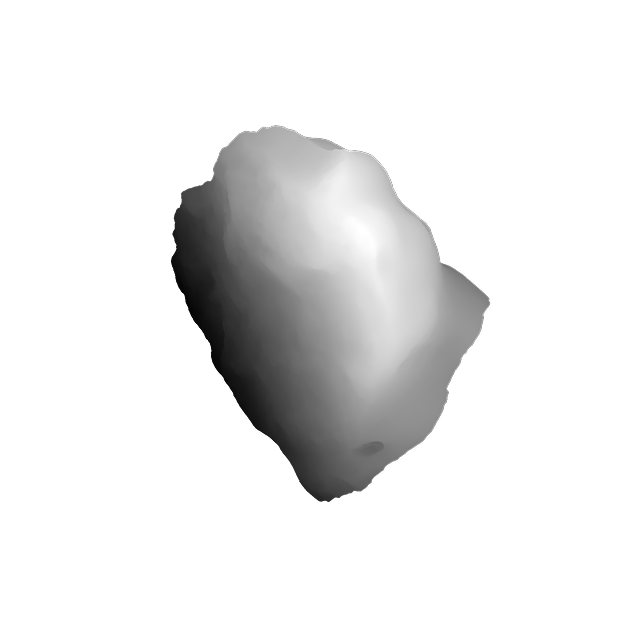
A fragment of the torso (back section) of Heracles from the Buchach Town Hall
Creation
The limestone block forms the central fragment of the monumental sculptural group “Heracles tearing open the jaws of the Nemean lion”. It was created in the mid-18th century for the balustrade of the Buchach Town Hall by the architect Bernard Meretyn and the sculptor Johann Georg Pinsel. In the composition, the torso of the ancient hero bore the main structural and symbolic weight. The essence of Heracles’ first heroic feat demanded an extreme, almost superhuman display of physical strength. This transformed the man’s back into the main arena of a sculptural battle between the Baroque spirit and material chaos.Description
As this fragment has come down to us in a damaged state and without its limbs, archival photographs from the early 20th century have proved to be the key to understanding it. They clearly show how Pinsel constructed the figure’s remarkable anatomy, which captures a moment of tremendous physical exertion. The figure of Heracles is sharply leaning forwards and twisted diagonally. The back is not merely an anatomical depiction, but a complex, tense architectural composition.
The sculptor deliberately exaggerated the musculature: the shoulder blades are raised, the dense ridges of the broadest back muscles are tensed to the limit, and the spine forms a steep, dynamic arc. Pinsel employed his favourite technique here – expressive Cubist modelling of volumes, where the transitions between muscles are rendered not with smooth lines, but with sharp, bold edges. This technique created deep shadowed recesses, so that when viewed from below, from the town hall square, it seemed as though the figure’s skin was pulsating with the rush of blood and fury.
Today, stripped of its head, arms and legs, this fragment of a torso is perceived as an uncompromising Baroque “non-finito”. Time, erosion and the cavities in the limestone have washed away the fine details, laying bare the very essence of Pinsel’s original vision – pure energy embodied in stone. The porous surface of the back, scarred by the centuries, now resembles a weathered rock or a mountainous landscape. In this form, the fragment has finally lost its representational quality and has become a self-sufficient abstract monument. It has become a symbol of the eternal struggle, where the battered human torso has merged into a single whole with the very texture of nature itself.
- A fragment of the torso of Heracles. mid-18th century.
- Limestone.
- Size: .
- Provenance: Buchach Town Hall, Ternopil region.