
Cherub from Horodenka: a Frozen Swoop
Creation
The sculpture originates from the Church of the Immaculate Conception of the Blessed Virgin Mary in Horodenka – a joint project by the architect Bernard Meretyn and the sculptor Johann Georg Pinsel. The church was commissioned by Mykola Vasyl Pototskyi, the starosta of Kaniv, and built between 1745 and 1769. The figure of the cherub was created during the height of Pinsel’s creative career – between 1750 and 1755. After the church’s interior was destroyed during the Soviet era, this unique wooden sculpture was saved by art historians. Today, the sculpture is kept separately from the original altar complex, yet it remains a fully self-sufficient example of Baroque art.Description
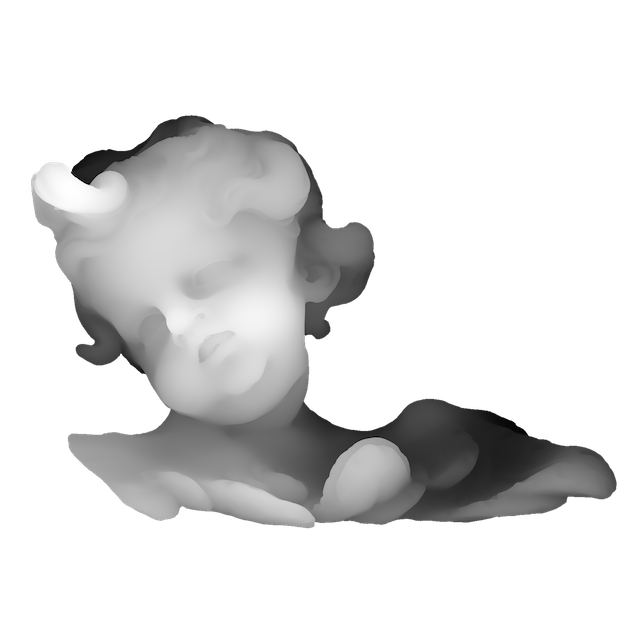
The cherub’s head is covered in white levkas, which skilfully imitates the surface of fine marble. A characteristic of Pinsel’s personal style is the exceptionally naturalistic portrayal of the child’s face. In this work, the master completely departs from the classical Baroque serenity: the angel’s sorrowful eyes and tragic facial expression allude to biblical foreshadowings of Christ’s future sufferings. Despite the overall sadness, the plump childish cheeks and slightly parted lips lend the figure a particular tenderness and realism.
The cherub’s dynamic wings are spread in the swift, sweeping manner characteristic of the artist. The plumage is carved with expressive, deep lines that create a tense interplay of light and shadow. Pinsel masterfully conveys a sense of absolute tranquillity and balanced flight in the air. The graceful form of the curls and the impeccable anatomical proportions demonstrate the technical excellence of the great master’s carving.
- Cherub. 1752-1755.
- Limewood, white paint.
- Size: 30,5х42,5х22.
- Location: Johann Georg Pinsel Museum in Lviv. LAG inv. no С-І-1078.
- Provenance: the high altar of the Missionary Fathers’ Church of the Immaculate Conception of the Virgin Mary in Horodenka, Ivano-Frankivsk region.